RS-AIMS Project
Runway Safety Autonomous Infrastructure Management




Overview
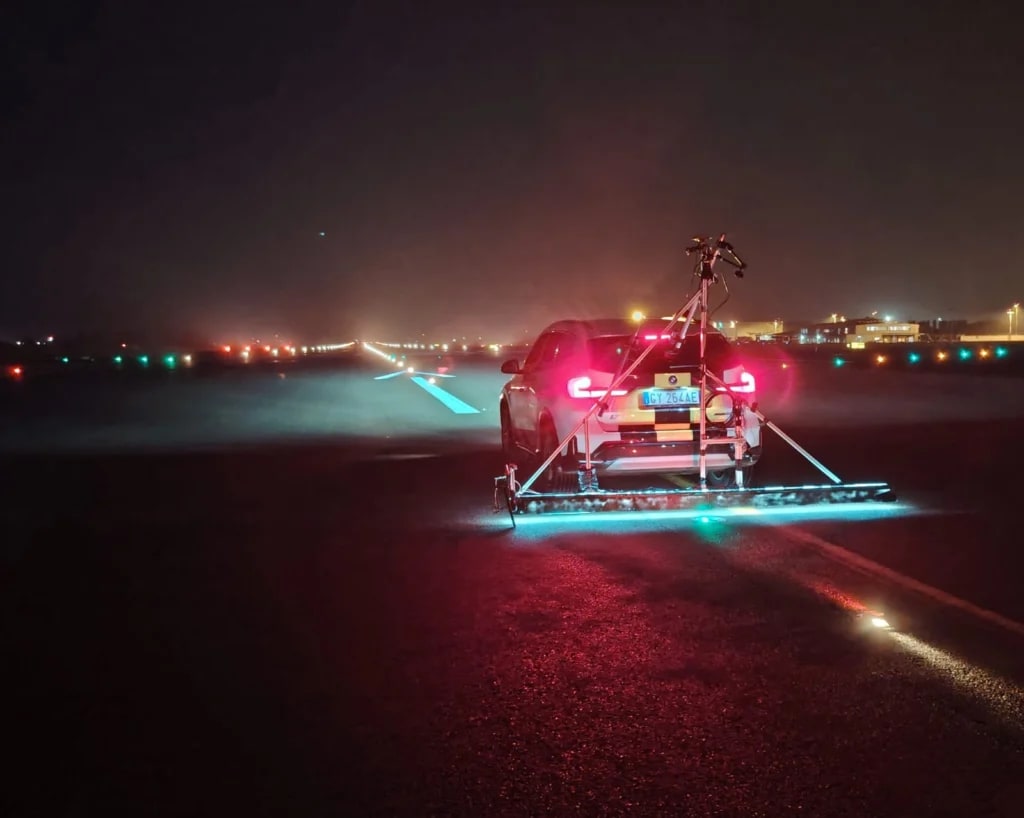
The project aims to develop an autonomous robotic system for the security, inspection, and maintenance of airport infrastructure utilizing Autonomous UAV and UGV Systems. These are aerial and ground platforms equipped with multispectral sensors.
Our A-VMS Software Platform functions as a unified control center that allows for mission planning and the collection of geo-referenced data, which are currently complex, costly, and heavily dependent on human intervention.
RS-AIMS addresses these needs through the creation of an integrated ecosystem of mobile robots, artificial vision systems, and software control platforms, capable of detecting and managing in real-time anomalies, debris (FOD – Foreign Object Debris), and structural deterioration of airport surfaces.
Innovative Subsystems
The project includes the development and integration of several innovative subsystems:
Autonomous UAVs and UGVs
Aerial and ground platforms equipped with multispectral sensors, LiDAR, and thermal cameras for the automatic inspection of runways, markings, and lighting systems.
Multifunction Docking Station
An intelligent unit for recharging, refilling, and performing diagnostics on robots, designed to operate continuously in airport environments (24/7).
AI Modules for FOD Detection and Predictive Maintenance
Neural networks trained to identify foreign objects, cracks, or anomalies, and to generate automatic reports that can be integrated into existing airport systems (A‑SMGCS, Airport Operations Center).
Planned Activities
The planned project activities include:
Operational requirements analysis: Study of airport inspection procedures in compliance with ICAO Annex 14 and EASA Part ADR regulations.
Design and prototyping of robots: Creation of modular UGV/UAV platforms resistant to harsh environmental conditions.
Software and AI development: Design of vision and automatic classification modules for FOD and runway defect detection.
Integration and laboratory testing: Validation of hardware/software architectures and communication protocols.
Field experimentation: Operational testing on real runway sections in collaboration with airport operators.
Innovation
RS‑AIMS introduces highly innovative elements compared to current airport monitoring practices:
The combined use of autonomous robotics and artificial intelligence to ensure continuous, safe, and high‑precision inspections.
A modular and scalable approach, adaptable to other infrastructural contexts (ports, railways, roads).
The ability to reduce operational time and costs while increasing safety and overall reliability of runway operations.
Expected Impacts
The expected impacts of the RS‑AIMS project extend across multiple dimensions:
Technological
Development of an integrated autonomous inspection system compliant with international safety standards.
Economic
Reduction of maintenance costs and increase in airport operational efficiency.
Social
Enhanced safety for personnel and reduction of high‑risk manual activities.
Environmental
Optimization of energy resources and reduced environmental impact of inspection operations.
RS‑AIMS represents a strategic step toward the evolution of the digital and autonomous airport. By combining robotics, artificial intelligence, and advanced control systems, RS‑AIMS provides a comprehensive solution for the intelligent management of runway safety and maintenance, contributing to safer, more efficient, and sustainable airport operations.